Tattoo Removal in NYC: Costs, Clinics and What to Ask
Prices swing from under $100 a session in Queens to over $500 on Park Avenue for the same tattoo. Here is what removal actually costs in New York City and which clinics are worth a consultation in each borough.
silvano para
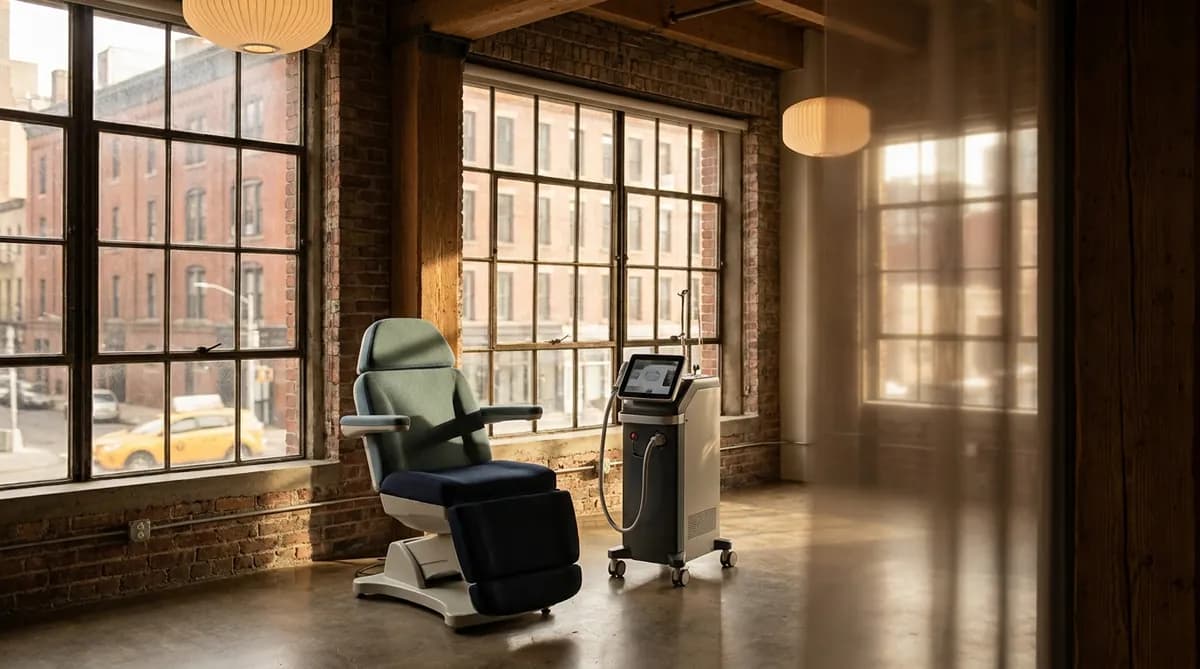
New York has more laser tattoo removal clinics per square mile than anywhere else in the United States, which is good news for choice and bad news for deciding. Prices swing from under $100 a session in Queens to over $500 in a Park Avenue dermatology practice for the same tattoo, and the person holding the laser might be a board-certified dermatologist or a technician who finished a weekend course.
This guide covers what laser tattoo removal actually costs in NYC, which clinics are worth a consultation in each borough, and the questions people ask before booking a first appointment.
How much does tattoo removal cost in NYC?
Expect $150 to $500 per session in Manhattan and $100 to $350 in Brooklyn, Queens and the Bronx. A full course of 6 to 12 sessions therefore lands somewhere between $900 and $6,000 depending on the size of the tattoo and how many ink colors are in it.
| Tattoo size | Manhattan, per session | Outer boroughs, per session | Typical full course |
|---|---|---|---|
| Small (under 3 in) | $150-$250 | $100-$175 | $900-$2,500 |
| Medium (3-6 in) | $250-$400 | $175-$300 | $1,750-$4,400 |
| Large (6-12 in) | $350-$500 | $250-$400 | $2,800-$6,000 |
| Half sleeve or bigger | $450-$800 | $350-$600 | $4,500-$9,600 |
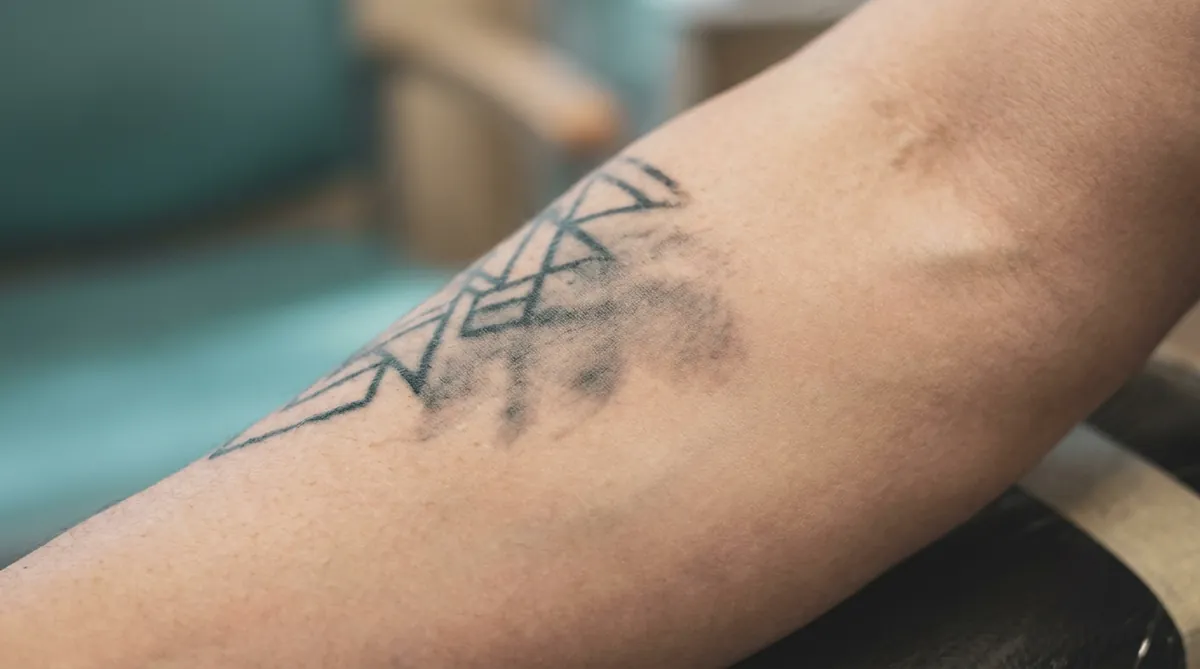
Three things move the price more than anything else. Tattoo size sets the base rate. Ink colors decide how many sessions you need , black clears fastest, green and sky blue slowest. And who owns the laser: a physician-run practice on the Upper East Side charges medical-practice prices, while a dedicated removal studio charges studio prices.
Most NYC clinics sell packages of 6 or 10 sessions at 10-25% off the single-session rate, and several guarantee complete removal for one flat fee. If you want a number for your specific tattoo, our tattoo removal cost calculator estimates cost and session count from size, ink colors, placement and age.
Best laser tattoo removal clinics in NYC
These are established clinics across the five boroughs. Every one is listed in our directory with address, phone and hours , we do not rank them, take commission, or verify licenses, so treat this as a shortlist to call rather than a recommendation.
Midtown and Flatiron Manhattan
- LaserBodyNYC , long-running Midtown studio, tattoo removal alongside other laser treatments.
- LaserAway Flatiron , national chain, standardized pricing and equipment across locations.
- Satori Laser , several Manhattan locations, useful if you want an appointment near work rather than near home.
- WOW LASER NYC , removal-focused studio in Manhattan.
Downtown Manhattan
- Clean Slate Laser , removal specialists rather than a general med spa.
- NAAMA Studios , uses a non-Q-switched system marketed for faster clearance and shorter gaps between visits.
- Inkless Tattoo Removal , removal-only studio.
- LaserAway Tribeca and LaserAway Meatpacking.
- Laser & Skin Surgery Center of New York , physician-led dermatology practice; the expensive end, but the right call if you have darker skin, a previous bad reaction, or scarring.
- Studio Esthetique Skin & Laser Center, Erase Spa, Redink Tattoo Removal, The Fadery, TakeTatt, CHNG, dr LASER, Infinity Laser Spa.
Brooklyn
- Brooklyn Laser Tattoo Removal , removal-only, generally cheaper per session than Manhattan.
- Gotham Tattoo Removal
- Velvet Tattoo Removal
- Step Up Skin Laser
- MetroLaser NYC
- Clean Slate Laser Brooklyn, LaserAway Brooklyn Heights, LaserAway Park Slope, LaserAway Williamsburg.
Queens
See the full list of New York laser tattoo removal clinics in the directory.
Is laser tattoo removal safe?
Yes, when it is done properly. Laser tattoo removal is one of the most studied cosmetic procedures there is, and serious complications are uncommon. The realistic risks are temporary: redness, swelling, pinpoint bleeding and the occasional blister for a few days after each laser treatment. Longer-term risks are hypopigmentation (a patch lighter than the surrounding skin) and, rarely, scarring , almost always from too much energy, sessions spaced too close together, or picking at a healing blister.
Two things matter more than the clinic's marketing. First, whether they adjust for your skin type: darker skin tones carry more melanin in the epidermis, melanin absorbs laser energy, and treating dark skin at settings meant for pale skin is how pigment problems happen. A good practitioner uses a 1064 nm wavelength at lower fluence and accepts more sessions in exchange for safety. Second, whether they do a test patch before treating a whole tattoo.
New York State requires that laser procedures be performed by a licensed medical professional or under a physician's supervision. Ask who is actually operating the laser and who supervises them. A clinic that answers that question straight away is telling you something useful.
How does laser tattoo removal work?
Tattoo ink sits in the dermis in particles too big for your immune system to carry away , that is why a tattoo is permanent in the first place. The laser fires an extremely short pulse of light at a wavelength the pigment absorbs. The particle heats and fractures, and the fragments are now small enough for your lymphatic system to clear over the following weeks.
That is also why sessions are spaced 6 to 8 weeks apart. The waiting is not the clinic being difficult; it is your body doing the actual removal work.
Two families of laser technology are in use. Q-switched systems fire in nanoseconds and have been the standard for decades. Picosecond systems (PicoSure, PicoWay, Enlighten) fire a thousand times faster, shatter pigment into finer fragments, and typically clear a tattoo in fewer sessions , at a higher price per session. On the whole course the two often cost about the same.
What matters more than the brand name is wavelength coverage. Black and dark blue ink respond to 1064 nm. Red responds to 532 nm. Green and sky blue need 694 nm or 755 nm, and a clinic without those heads will stall on a colorful tattoo no matter how modern the machine is.
How many sessions will you need?
Most professional tattoos take 6 to 12 sessions. Amateur and stick-and-poke work often clears in 4 to 6 because the ink sits shallower and there is less of it. Heavy blackwork, layered cover-ups and multi-color pieces run to 12-15.
Your treatment plan depends on ink density, tattoo age, placement on the body and your skin type. Ink on the chest or back clears faster than ink on the hands or ankles, where circulation is poorer. A clinic that quotes an exact session count at the consultation before seeing how you respond to the first two treatments is guessing.
Does tattoo removal hurt?
It stings. The usual description is a hot rubber band snapping against the skin, sharper than getting tattooed but over far faster , a small tattoo takes under a minute of actual laser time. On a 1-to-10 scale most people land around 6 or 7 without numbing.
Every serious NYC clinic offers something for it: forced cold air during the session, topical numbing cream applied 30 minutes beforehand, or lidocaine injections for larger pieces. Ask what is included in the price and what costs extra, because that varies a lot between studios.
Can all tattoo colors be removed?
Not equally. Black and dark blue clear most reliably. Red and orange respond well to the right wavelength. Green and sky blue are the stubborn ones and sometimes leave a faint shadow.
White, pastel and flesh-toned cosmetic pigments are a special case: they often contain titanium dioxide, which can oxidize on the first laser pass and turn grey or black before it starts clearing. It is recoverable, but it is exactly why you want a test patch on a hidden corner of the tattoo first.
Can a tattoo be 100% removed? Often, yes , particularly black ink on lighter skin. But no honest clinic guarantees complete removal on a multi-color piece, and any that does is selling rather than assessing.
How to choose a tattoo removal clinic in NYC
- Get two or three consultations. They are almost always free, and quotes for the same tattoo routinely differ by a factor of two across the city.
- Ask which laser and which wavelengths. If your tattoo has green or blue in it, this question decides whether the clinic can finish the job.
- Ask who operates the laser and who supervises them.
- Ask for before-and-after photos of tattoos like yours , same colors, similar skin tone, not just easy black outlines.
- Ask for a test patch if you have darker skin, cosmetic ink, or a tattoo that has already been treated elsewhere.
- Read the package terms. A prepaid course is cheaper per session, but check what happens if you move, stop early, or need more sessions than estimated.
Frequently asked questions
How much is a 3 inch tattoo removal in NYC? Roughly $200 to $350 per session in Manhattan and $150 to $250 in the outer boroughs, over 6 to 10 sessions. That is $1,200 to $3,500 for the full course.
Is there cheap tattoo removal in NYC? Yes, mostly in Brooklyn, Queens and the Bronx, and through prepaid packages. Be careful with the cheapest end: an old Q-switched machine at $80 a session can need twice the visits of a $200 picosecond session, which makes it more expensive overall and harder on your skin.
How long does the whole process take? Sessions are 6 to 8 weeks apart, so eight sessions is about a year. Large or multi-color tattoos can take two.
What if I only want it faded for a cover-up? Say so at the consultation. Fading takes 2 to 4 sessions instead of a full course, which usually means $400 to $1,200 rather than several thousand. Bring your new artist's design if you have one , how much lightening you need depends on what is going over it.
Do I need to stop before summer? Sun exposure between sessions forces the clinic to lower the energy, which adds visits. Keep the area covered and use sunscreen throughout, and expect your practitioner to postpone a session if you turn up with a tan.
Comments(0)