Laser Tattoo Removal in Buffalo: Prices and Availability
Buffalo is the cheapest removal market in this directory, and it carries the same New York State supervision rules that apply in Manhattan. With few providers, the constraint is the calendar rather than the price.
silvano para
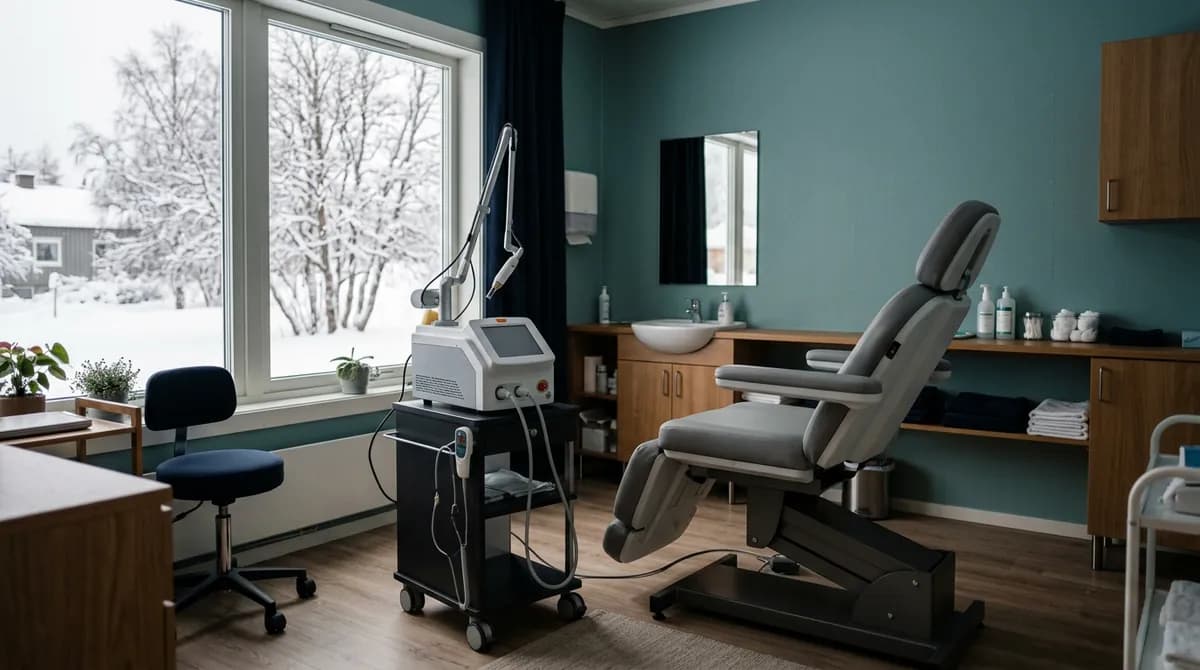
Buffalo is the cheapest laser tattoo removal market in this directory: $100 to $275 per session, against $150 to $500 for the same tattoo in Manhattan. Western New York also inherits one of the strictest sets of rules in the country on who is allowed to hold the laser, which is an unusual combination of low price and real regulatory protection. The constraint here is not money, it is appointment availability.
Below: what a course actually costs, the clinics currently listed across Buffalo and the surrounding towns, why you should book the whole course rather than one session at a time, and the questions people ask before a first consultation.
What tattoo removal costs in Buffalo and western New York
A single session in the United States runs $75 to $500. Buffalo sits near the bottom of that band. Rent is cheaper, there is no downtown Manhattan premium to pay, and clinics here price against each other rather than against a luxury dermatology market.
| Tattoo size | Per session | Typical sessions | Full course |
|---|---|---|---|
| Small (under 3 in) | $100 to $150 | 6 to 10 | $600 to $1,300 |
| Medium (3 to 6 in) | $135 to $200 | 7 to 11 | $1,000 to $2,000 |
| Large (6 to 12 in) | $175 to $275 | 8 to 12 | $1,400 to $2,900 |
Sleeves and back pieces are quoted individually and run higher, often as a treatment block rather than a per tattoo rate. The three things that move your number are size, ink colors (black clears fastest, green and sky blue slowest, and a multi-color piece can need half again as many visits) and how deep and dense the ink was laid. Our tattoo removal cost calculator gives you a per session and total estimate from those variables before you call anyone.
Two warnings about the low end. First, US health insurance does not cover any of this; it is classified as cosmetic, and that holds in New York as everywhere else. If the total is genuinely out of reach, look at free and reduced cost removal programs, which run through hospital systems and community initiatives rather than commercial clinics. Second, a very cheap session on an old machine is not a bargain if it needs four extra visits to reach the same result. At Buffalo prices the gap between a $110 session and a $180 session across a ten session course is around $700, which is real money but smaller than the cost of stalling out at 80 percent cleared.
The clinics listed in Buffalo and the surrounding towns
Four clinics are currently in the directory for the Buffalo area. That is a short list for a metro of over a million people, so treat it as a starting point rather than a complete census, and call more than one. We do not rank these clinics, take commission, or verify their licenses.
City of Buffalo
- Rethink Laser Tattoo Removal, a removal-focused studio rather than a general aesthetics practice.
- Removery Tattoo Removal & Fading Buffalo, part of a national chain, which means standardized pricing, package structures and equipment across locations.
Williamsville and West Seneca
- Cosmetic Vein & Laser Center in Williamsville, a medical practice offering removal alongside other laser work.
- The Skin Center at Southgate Medical Group in West Seneca, attached to a physician group.
Between the city, Williamsville to the northeast and West Seneca to the south, most of Erie County is within a 25 minute drive of at least one of these. The full set, with addresses, phone numbers and hours, is on the Buffalo tattoo removal directory page. If you operate a clinic in Buffalo, Amherst, Cheektowaga, Tonawanda, Niagara Falls or Rochester and you treat tattoos, add your listing; western New York is underrepresented and people in this region are actively searching.
New York's supervision rule applies in Buffalo too
This is the part most price comparisons miss. New York State requires laser procedures to be performed by a licensed medical professional or under a physician's supervision. That rule does not stop at the Hudson. A clinic in Williamsville operates under the same legal framework as a clinic on Park Avenue, even though it charges a third of the price.
In practice this means the floor is higher here than in states that allow essentially anyone to buy a device and start treating. It does not mean every operator is equally skilled, and it does not mean you should skip the question. Ask who physically holds the laser during your session, what their credential is, and which physician supervises the practice. A clinic that answers immediately and specifically is telling you something useful. A clinic that gets defensive is telling you something too.
Ask separately whether the practice does a test patch before treating a whole tattoo. That matters most for Fitzpatrick IV to VI skin, where melanin in the epidermis competes with the ink for laser energy and the safe protocol is 1064 nm at lower fluence with 8 to 12 weeks between sessions instead of 6 to 8. Our guide to laser tattoo removal on darker skin sets out what a careful plan looks like.
With four providers, the calendar is the bottleneck
In a dense market you can call on Monday and be treated on Thursday. With a handful of providers covering a whole region, the scarce resource is a slot at the right interval, and that changes how you should book.
Sessions need to be 6 to 8 weeks apart. That gap is not the clinic being awkward, it is the time your lymphatic system needs to clear the ink fragments the laser broke up. Go back too early and you are paying to irritate skin that has not finished the work; leave it much longer and nothing is lost except your own months. Eight sessions at eight week intervals is fourteen months. If two of those appointments slip by three weeks each because the schedule was full, you have added a month and a half to your total for nothing.
So book the whole course up front. When you finish your first appointment, ask to schedule the next four or five on the spot at the correct spacing, rather than calling each time. Most clinics will do it, prepaid package holders usually get first refusal on slots, and it costs you nothing to reschedule a single visit later if you need to. This is the single most useful piece of logistics advice for this market, and it matters far more here than in a city with fifty studios.
Which colors will slow you down
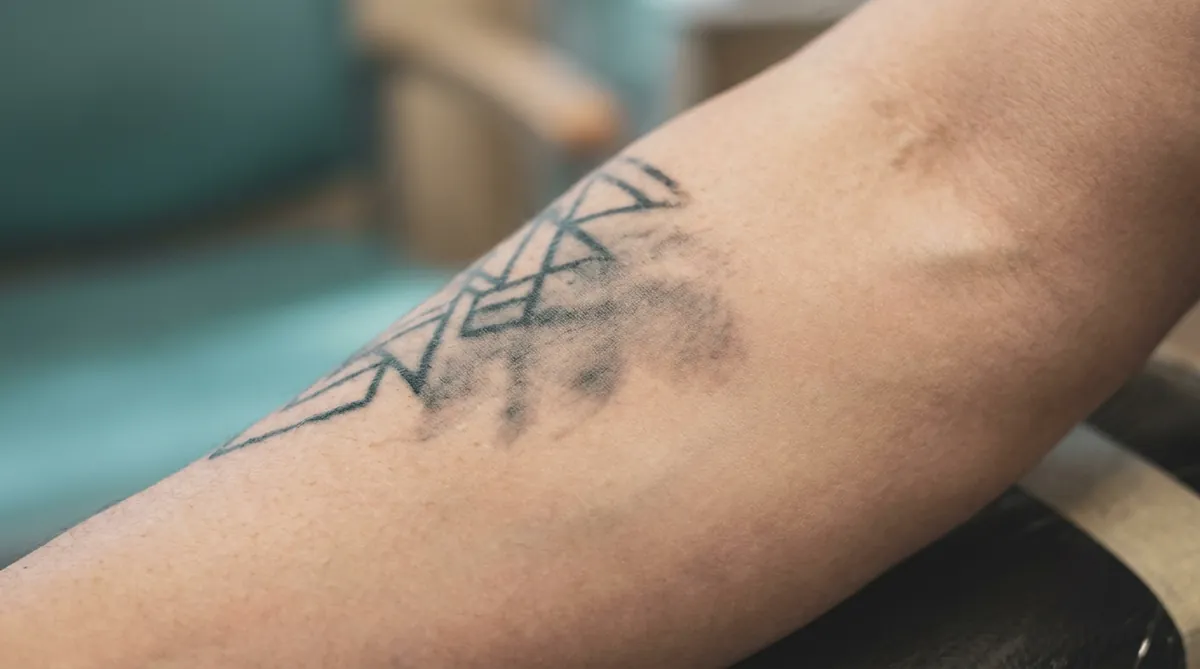
Black and dark blue clear most reliably, at 1064 nm. Red responds to 532 nm. Green and sky blue are the stubborn ones and need 694 nm or 755 nm, so ask specifically whether the clinic has those wavelengths before you commit to a course on a colorful piece. Q-switched systems fire in nanoseconds; picosecond platforms such as PicoSure, PicoWay and Enlighten fire far faster and often need fewer visits at a higher price each, which frequently evens out across the full course. Our comparison of picosecond versus Q-switched removal covers when the upgrade is worth paying for.
White, pastel and flesh-toned cosmetic pigments deserve their own caution. They often contain titanium dioxide, which can oxidize on the first laser pass and turn gray or black before it begins to clear. It is usually recoverable, but it is exactly why a test patch on a hidden corner is not optional. If you are dealing with cosmetic pigment rather than body ink, it is worth reading about saline removal, which some practitioners prefer for shallow cosmetic work.
Aftercare through a Buffalo winter
The standard routine applies: keep the area clean and covered for the first few days, do not pick at blisters, skip pools and hot tubs until the skin has closed, and use sunscreen on the site for the whole course. Two local notes. Lake effect winter is actually helpful, because the treated area stays covered and out of the sun for months, which is when pigment changes are most likely to happen. And dry indoor heat is the main irritant from December through March, so a plain fragrance-free ointment and a humidifier do more than any specialty product. Our aftercare guide has the full day by day timeline and the signs that mean you should call the clinic.
Frequently asked questions
Is Buffalo really cheaper than downstate?
Yes, substantially. Expect $100 to $275 a session here against $150 to $500 in Manhattan for comparable work, and the same state supervision rules apply in both places.
How far in advance should I book?
Book your next appointment before you leave the current one, and ideally schedule the next four or five at 6 to 8 week intervals in one go. With few providers in the region, the schedule fills faster than the price rises.
How many sessions will I need?
Most professional tattoos take 6 to 12 sessions. Amateur or stick and poke work often clears in 4 to 6 because the ink sits shallower. Heavy blackwork and layered cover-ups can run to 12 to 15.
Does insurance cover any of it?
No. US insurers classify tattoo removal as cosmetic, including in New York, so plan on paying out of pocket or through a clinic payment plan.
Is it worth driving to Rochester or Toronto for more choice?
Rarely worth it on price, given Buffalo already sits at the low end. It can be worth it if a nearer clinic lacks the wavelength your ink needs, since one clinic that can finish the job beats two that cannot.
What if I only want the tattoo lightened for a cover-up?
Say so at the consultation. Fading takes 2 to 4 sessions instead of a full course, usually $300 to $900, and it is worth bringing your artist's proposed design so the clinic knows how much lightening is actually needed.
Start with a couple of phone calls. The current list of laser tattoo removal clinics in Buffalo and western New York has hours, addresses and contact details for every clinic mentioned here.
Comments(0)