Tattoo Removal and Fading in Portland, Oregon
Portland is one of the most heavily tattooed cities in the country, and its removal market reflects that. A good share of the work here is not removal at all, it is fading for a cover-up.
silvano para
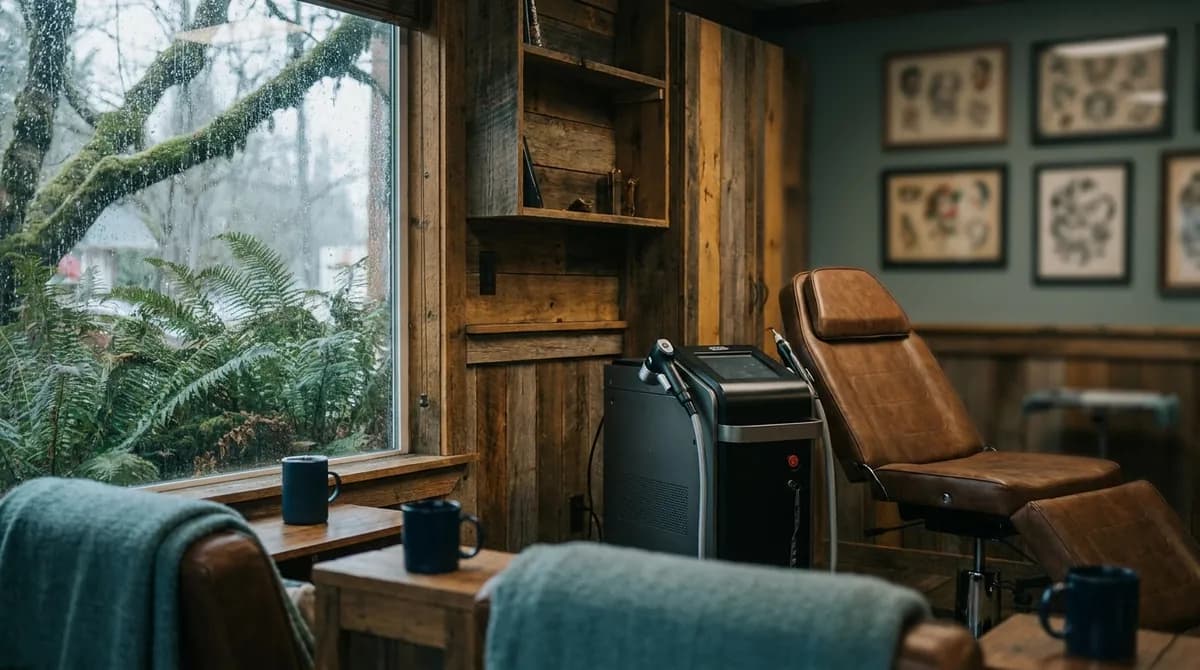
Portland is one of the most heavily tattooed cities in the country, and its laser market reflects that. Expect $125 to $350 per session for standard removal, but a large share of the people walking into Portland clinics are not trying to erase anything: they want a tattoo lightened enough for a cover-up, which is 2 to 4 sessions and $300 to $900 instead of a year long course.
Those are two different products with two different price tags, and picking the wrong one is the most common and most expensive mistake made here. Here is how the numbers work, which clinics are listed, and how to get your artist and your laser tech pointed at the same outcome.
What removal and cover-up fading cost in Portland
Complete removal follows the national pattern. A US session runs $75 to $500; Portland quotes usually land between $125 and $350, with dermatology practices at the top of that band and removal studios and med spas lower.
| Tattoo size | Per session | Sessions for full removal | Full course |
|---|---|---|---|
| Small (under 3 in) | $125 to $175 | 6 to 10 | $800 to $1,700 |
| Medium (3 to 6 in) | $175 to $250 | 8 to 12 | $1,400 to $3,000 |
| Large (6 to 12 in) | $250 to $350 | 8 to 12 | $2,000 to $4,200 |
Fading for a cover-up is a different calculation entirely, because you are not clearing the ink, only knocking it back far enough that a new design can sit over it without the old one ghosting through.
| Cover-up job | Sessions | Typical total |
|---|---|---|
| Small piece, black ink | 2 to 3 | $300 to $500 |
| Medium piece or dark lettering | 2 to 4 | $400 to $700 |
| Sleeve panel or heavy blackwork | 3 to 4 | $600 to $900 |
The gap between those two tables is the whole point. A medium tattoo you want gone costs $1,400 to $3,000 and takes a year or more. The same tattoo, lightened enough for a competent artist to work over, costs a few hundred dollars and is done in six to eight months. For a per tattoo estimate on either path, our tattoo removal cost calculator factors in size, ink colors, placement and age. Note that no US health insurer covers either option; both are classified as cosmetic.
Fading or full removal? Decide before you book
Walk into a consultation without an answer to this and you will usually be quoted a full course, because that is the default. Three questions settle it.
Do you already know what is going over it? If you have an artist and a design, you are almost certainly a fading client. The design dictates how much lightening you need, and past that point you are paying for sessions that serve no purpose.
Is the old piece dark, dense or badly placed? Heavy blackwork and thick tribal outlines need more lightening before a cover-up will read cleanly, so budget toward the top of the fading range. A faded amateur piece from fifteen years ago may need only one or two passes.
Do you actually want bare skin? If the honest answer is yes, do not let a cheaper fading quote talk you into a half measure. Fading leaves visible ink by design.
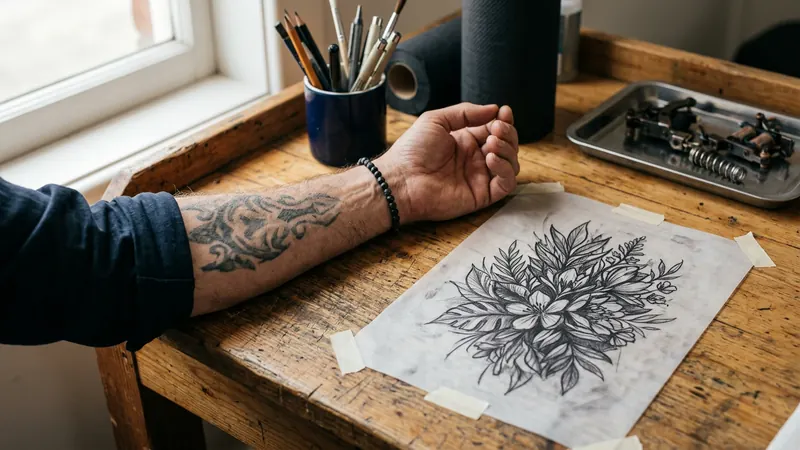
Our page on tattoo fading for cover-ups goes deeper on how much lightening different styles of design require.
How to coordinate your artist and the laser clinic
These are two separate businesses that rarely talk to each other, and in a city with as much tattoo work as Portland the handoff between them is where plans go wrong. A sequence that works:
- See the tattoo artist first. Bring photos of the existing piece and talk through what you want over it. The artist tells you how much fading the design needs, in plain terms: barely any, a couple of shades, or as light as you can get it.
- Take that instruction to the laser consultation. Ask the clinic to plan for that endpoint, not for clearance. A good practitioner will give you a session estimate rather than a fixed number, because they need to see how your ink responds to the first two passes.
- Photograph the tattoo in consistent light after every session. Same spot, same time of day, no flash. Progress between sessions is gradual enough that memory is unreliable, and these photos are what your artist will judge from.
- Send the artist an update after session two or three. They may tell you it is already light enough, which saves you a session or two.
- Wait for the skin to settle before tattooing over it. Most artists want at least 6 to 8 weeks after the final laser session, sometimes longer, so the area is fully healed and the true final tone is visible.
Where the two plans conflict, the artist wins on how light and the clinic wins on how fast. Pushing sessions closer together than 6 to 8 weeks does not accelerate anything, because the clearing is done by your lymphatic system between visits, not by the laser during them.
Portland clinics offering removal and fading
Portland's clinics cluster on the inner east side, downtown and the Pearl District, with several more on the west side in Beaverton and Lake Oswego. That spread makes a difference over a year of appointments, so weigh the commute alongside the quote. We do not rank these clinics, take commission from them, or verify their licenses.
Removal and laser focused clinics
- Stone Free - Williams, a removal focused studio
- Cascade Laser Clinic
- Aesthetics Institute
- Gold Standard Aesthetic
Dermatology practices
- Knott Street Dermatology
- Dermatology Professionals
- Fresh Faces RX, a physician led aesthetics practice
Med spas and aesthetics clinics
When you call, say the word fading explicitly. Some practices treat it as a routine service with its own pricing; others quote you a removal course and adjust later, which makes comparison harder. Addresses, hours and phone numbers for all of these are on the Portland tattoo removal directory page.
Ink colors, and which ones complicate a cover-up
Wavelength coverage decides what a clinic can actually do for you. Black and dark blue respond to 1064 nm, red to 532 nm, and green and sky blue need 694 nm or 755 nm. Ask which heads the device has before you commit, especially on the colorful work Portland artists are known for. Q-switched systems fire in nanoseconds and remain a solid standard; picosecond platforms such as PicoSure, PicoWay and Enlighten fire far faster, fragment pigment more finely and often need fewer sessions at a higher price per visit.
For cover-up work, the color problem is different from the removal problem. You do not need every trace gone, but you do need the fading to be even. Green and sky blue are the slowest to move, so a piece with green foliage or blue water can lighten unevenly, leaving patches that show through a new design. Tell your artist which colors are proving stubborn so the design can account for them.
White, pastel and flesh-toned pigments are their own trap. They often contain titanium dioxide, which can oxidize on the first laser pass and darken to gray or black before it begins clearing. That is recoverable, but it is exactly why a test patch on a hidden corner comes first, and why anyone treating a cosmetic or white highlighted tattoo should be asked how often they have handled one.
Frequently asked questions
How many sessions do I need before a cover-up?
Usually 2 to 4, spaced 6 to 8 weeks apart, so about four to seven months from first laser session to being ready to tattoo. Heavy blackwork sits at the top of that range.
Is fading much cheaper than full removal?
Substantially. Fading typically runs $300 to $900 total against $800 to $4,200 for a complete course on the same tattoo, because you are paying for a quarter of the sessions.
How long should I wait after the last laser session before getting tattooed?
Most artists ask for at least 6 to 8 weeks so the skin is fully healed and the final tone is settled. Ask your artist directly, since some want longer on heavily treated areas.
Will the cover-up hide the old tattoo completely?
That depends on the new design more than on the laser. Dense, dark, high contrast designs hide more. Fine line and light color work hides much less, which is why the artist needs to see the faded result before committing.
What does removal cost in Portland if I do want it fully gone?
Around $125 to $350 per session over 6 to 12 sessions, so roughly $800 to $4,200 depending on size, ink density and colors.
Does the laser damage skin that will be tattooed later?
Properly done, no. Sessions spaced correctly, no picking at blisters and diligent sun protection between visits keep the skin in good condition. Scarring almost always traces back to excessive energy, sessions too close together, or a blister that was interfered with.
Whichever path you are on, get two consultations before booking anything, and bring your artist's opinion with you. The current list of laser tattoo removal clinics in Portland covers the inner east side, downtown, the Pearl and the westside suburbs.
Comments(0)