Laser Tattoo Removal in Houston: Prices and Who Holds the Laser
Houston is the largest removal market in Texas and one of the better priced big metros in the country. It also has a rule worth understanding before you book: Texas lets a non-physician operate the laser under delegation.
silvano para
Before you ask a Houston clinic what a session costs, ask who will be holding the handpiece and who supervises that person. Texas allows a physician to delegate laser operation to a non-physician under supervision, which is why removal here is cheap for a market this size (roughly $100 to $350 per session) and why quality swings so widely from one address to the next. In a city where a large share of patients have Fitzpatrick IV to VI skin, the answer to that one question matters more than the brand name printed on the machine.
Houston pricing, size by size
Houston is one of the better value large markets in the country. Competition is heavy, commercial rent is low compared with the coasts, and several clinics run flat rate pricing by size band rather than by the square inch. The floor is usually a minimum session charge of around $100 no matter how small the tattoo, because the clinic is paying for room time and a licensed operator either way.
| Tattoo size | Typical Houston price per session | Likely course total |
|---|---|---|
| Very small (under 2 sq in) | $100 to $150 | $500 to $1,200 |
| Small (wrist, ankle, 2 to 6 sq in) | $125 to $200 | $750 to $2,000 |
| Medium (forearm, shoulder, 6 to 20 sq in) | $175 to $275 | $1,200 to $3,000 |
| Large (half sleeve, upper back panel) | $250 to $350 | $2,000 to $4,200 |
| Full sleeve or back piece | $350 and up, often split into sections | $3,500 to $6,000 |
| Fading for a cover-up | $100 to $250 | $300 to $900 |
Work out your own likely range with the tattoo removal cost calculator before the consult, then compare it against what you are quoted. Two things distort Houston quotes: prepaid packages that look like a discount but assume a session count nobody can predict yet, and per-visit prices that only cover part of a larger piece. Ask what area is included and how many passes.
Who operates the laser, and where
Under Texas rules a laser used for hair or tattoo removal is operated under the authority of a delegating physician, who does not have to be standing in the room. In practice that produces three tiers in Houston: physician owned practices where a dermatologist or the physician's trained staff treats you, med spas with a medical director on paper and an aesthetician firing the device day to day, and everything in between. None of those tiers is automatically bad. What matters is whether the person on the trigger has treated skin like yours before, and whether a physician is genuinely reachable if something goes wrong. This directory does not verify licenses, credentials or supervision arrangements, so ask on the phone.
Physician owned dermatology and medical practices
Esta Kronberg, MD is a long standing dermatology practice inside the Loop, in the general Montrose and Museum District orbit. Clear Lake Dermatology: Narin "Dr.Joe" Apisarnthanarax MD covers the southeast side, useful if you are coming from Pearland, League City or the NASA corridor. Anti-Aging and Wellness MD is another physician led option for patients who want the consult and the treatment plan signed off by an MD.
Med spas and aesthetics studios
The larger group is med spas spread across the west side and the inner neighborhoods: Ovation Med Spa and NUVO Cosmedispa in the Galleria and Uptown area, Artavi Med Spa and MAD Aesthetics, plus Paloma Clinic Spa, Isabella Mia Skin Care and Shalom Essentials Spa. Patients in the Heights, Montrose and Midtown generally have the shortest drive; Katy and Sugar Land residents should check which of these has a west side location before committing to a ten visit course, because the drive is the reason most people abandon a treatment plan halfway.
Why the operator question is louder on brown skin
Houston is one of the most diverse cities in the United States, and a large share of removal patients here are Fitzpatrick IV to VI. Melanin in the epidermis competes with tattoo ink for the same laser energy. Get the wavelength or the fluence wrong and you do not just fail to clear the tattoo, you strip or trigger pigment in the surrounding skin, and hypopigmentation can take a year or more to recover, if it recovers.
The safe protocol is well established: 1064 nm Nd:YAG as the workhorse wavelength because it is the least absorbed by melanin, conservative fluence with more sessions rather than fewer aggressive ones, longer intervals of 8 to 12 weeks, and a mandatory test patch on a small area waited out for at least four weeks before treating the whole tattoo. Our detailed guide to tattoo removal on dark skin walks through what to expect and what should make you leave. If a clinic offers to treat a full sleeve on Fitzpatrick V skin at the first visit with no test patch, that is the moment to say no, regardless of price.
The device conversation, kept short
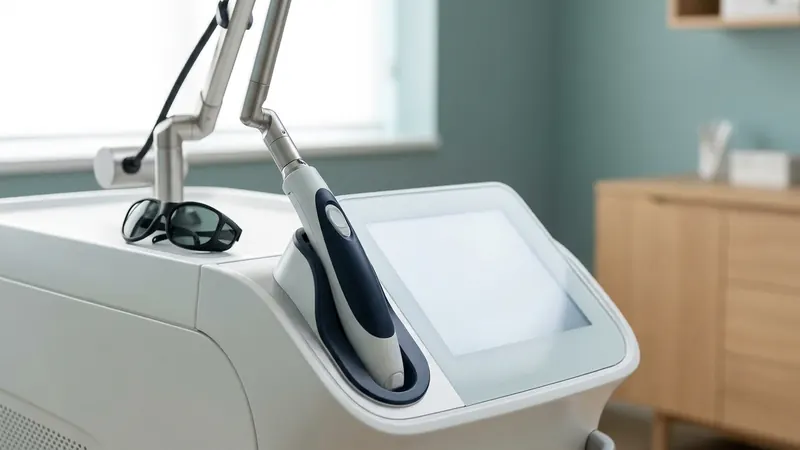
Houston clinics advertise both Q-switched systems (nanosecond pulses, the long standing standard) and picosecond platforms such as PicoSure, PicoWay and Enlighten. Picosecond devices can break pigment into finer particles and may reduce the number of visits on some tattoos, especially stubborn blues and greens, but they cost more per session and they do not rescue a bad protocol. A well set 1064 nm Q-switched laser in careful hands beats a picosecond machine run hot by someone who has not treated your skin type before. Judge the clinic on its answers, not on its equipment list.
One more wavelength note worth checking: black and dark blue respond to 1064 nm, red needs 532 nm, and greens and sky blues need 694 nm or 755 nm. Plenty of Houston med spas only carry 1064 and 532. If your tattoo has a lot of green, ask what the plan is for it before you pay for anything.
Six questions to ask a Houston clinic on the phone
- Who will perform my treatment, and what is their training on this specific device?
- Who is the delegating or supervising physician, and are they on site during treatments?
- How many patients with my Fitzpatrick type have you treated for tattoo removal?
- Do you test patch, and how long do you wait before treating the full area?
- Which wavelengths does your system deliver, and which will my colors need?
- What happens, and what does it cost, if I blister or develop a pigment change?
Clear answers to all six from a $150 med spa beat vague answers from a $300 one. Vague answers to question two are the biggest red flag in a delegation state.
Heat, sun and the Houston calendar
A treated tattoo is an open wound in the days after a session and a fragile healing site for weeks after that. Houston gives you eight months of strong sun and a lot of humidity, both of which work against you. Keep the site covered with clothing rather than sunscreen while it is still open, switch to broad spectrum SPF 30 or higher once it has fully closed, and keep it out of pools, the Gulf and hot tubs until then. Tanned skin is a real problem: most careful clinics will drop the energy or reschedule if you arrive with color on the treatment area, which quietly adds sessions to your course. The full routine is on our tattoo removal aftercare page.
Frequently asked questions
Is it legal for a non-doctor to remove my tattoo in Texas?
Yes. Texas permits laser treatment to be delegated to a properly trained non-physician operating under a delegating physician's authority and supervision. That is a legal framework, not a quality guarantee, and the supervising physician does not have to be present. Ask who they are and how the practice handles complications.
How many sessions should I plan for?
Six to twelve for full clearance on most professional tattoos, four to six on amateur or stick and poke work, and only two to four if you just want the piece light enough for a cover-up. On Fitzpatrick IV to VI skin expect the higher end of that range, because the safe approach is more sessions at lower energy.
Why is Houston cheaper than Dallas or Austin for the same treatment?
Volume and competition. The metro is large, the clinic count is high, and operating costs are lower than in the coastal markets. Price alone is not a warning sign here; a $150 session in Houston is normal, not a discount that implies corner cutting.
Will my insurance pay for any of it?
No. US health insurance classifies tattoo removal as cosmetic, so it is out of pocket everywhere in Texas, including at a dermatology practice. Some clinics offer payment plans or third party medical financing; the interest usually costs more than negotiating a package rate.
What does a test patch actually involve?
The clinic treats a small area, often a coin sized spot at the edge of the tattoo, at the settings they plan to use, then waits four to six weeks to see how your skin responds before treating the rest. It costs you one appointment and it is the cheapest insurance available against a pigment problem across a whole sleeve.
Can white or pastel ink be removed?
Carefully. White and light pastel inks usually contain titanium dioxide, which can oxidize under laser light and turn gray or black on the first pass. It is often reversible with further sessions, but it is a reason to test a small area first and to warn the clinic that white ink is present, especially in a tattoo with skin tone highlights.
Compare consultations across the metro using our full Houston tattoo removal directory, call two or three, and pick the one that answers the operator question without hesitating.
Comments(0)