Laser Tattoo Removal in Denver: Altitude, Dry Air and Prices
Denver removal prices sit in the middle of the national range, but healing here is not like healing at sea level. Thinner air, stronger UV and very low humidity all change what happens between your sessions.
silvano para
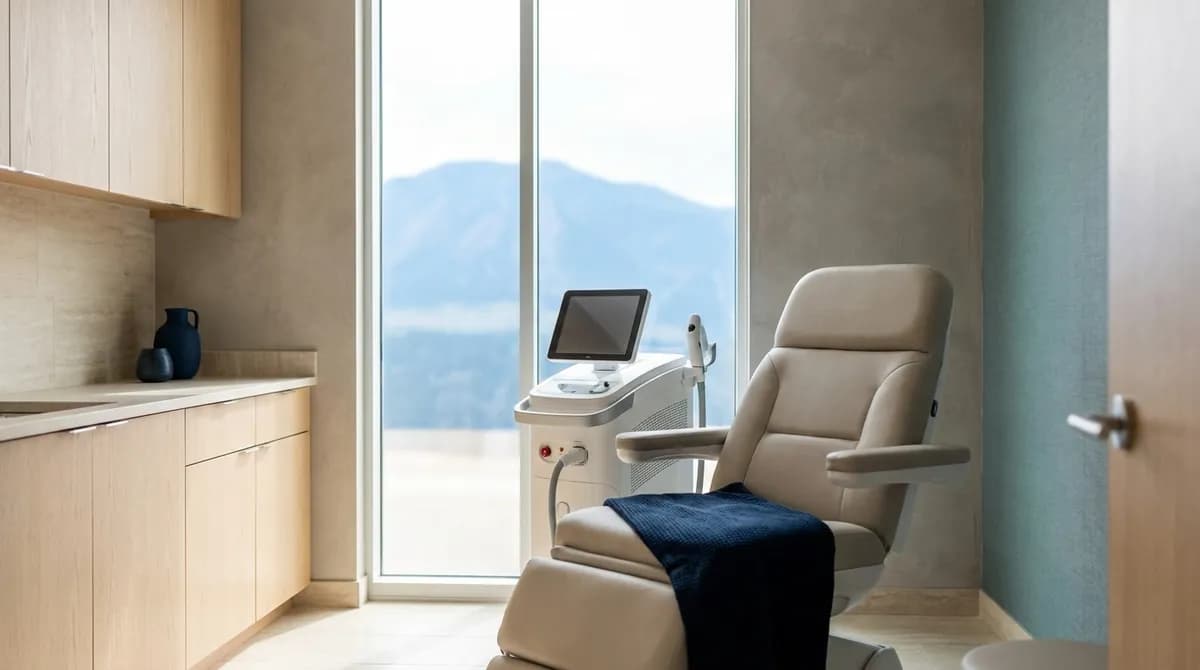
Laser tattoo removal in Denver runs about $125 to $375 per session, with most people completing a course for somewhere between $900 and $4,000. The prices are ordinary for a mid-size western metro. What is not ordinary is the environment your skin has to heal in, because a mile of elevation and some of the driest air in any major American city both work against the six weeks between your appointments.
This guide covers Denver pricing, what altitude and low humidity actually do to a healing treatment site, how to time a course around a Colorado year, and what should make you walk out of a consultation.
What laser tattoo removal costs in Denver
Denver sits in the middle of the national range. Central neighborhoods and Cherry Creek trend higher than the suburban ring through Lakewood, Aurora and Westminster, but the spread is modest compared to coastal metros. Removal studios and med spas anchor the low end; dermatology and plastic surgery practices sit at the top.
| Tattoo size | Per session | Typical sessions | Full course |
|---|---|---|---|
| Small (under 3 in) | $125 to $200 | 6 to 10 | $800 to $2,000 |
| Medium (3 to 6 in) | $175 to $275 | 7 to 11 | $1,200 to $3,000 |
| Large (6 to 12 in) | $250 to $375 | 8 to 12 | $2,000 to $4,500 |
| Half sleeve or larger | $350 to $550 | 10 to 15 | $3,500 to $7,500 |
Size sets the base rate and ink color sets the session count. Black and dark blue clear fastest at 1064 nm, red responds to 532 nm, and green and sky blue need 694 nm or 755 nm and move slowest of all. Age and placement matter too: an old, faded amateur piece on the chest is a much easier job than a dense new color tattoo on the ankle. The tattoo removal cost calculator gives you an estimate built from your own tattoo's size, colors, placement and age rather than a generic band.
None of it is covered by insurance. US insurers treat removal as cosmetic without exception, so plan for the full amount out of pocket. Prepaid packages typically save 10 to 25 percent, and there are a few other routes to a lower bill covered in our guide to free and low-cost tattoo removal.
The Denver variable: thin, dry air and hard UV
Laser removal does not remove ink. It fractures pigment particles into fragments small enough for your lymphatic system to carry away, and that clearance happens over the following weeks, in your skin, on your time. Anything that stresses the skin barrier during those weeks makes the process less efficient. Denver stresses it in two specific ways.
Low humidity pulls water out of the treatment site
Relative humidity along the Front Range spends much of the year far below what coastal cities see, and indoor heating from October through April drives it lower still. Skin loses water to dry air continuously, and a treatment site that has just been through a laser pass is already compromised: the barrier is inflamed, sometimes blistered, and less able to hold moisture in.
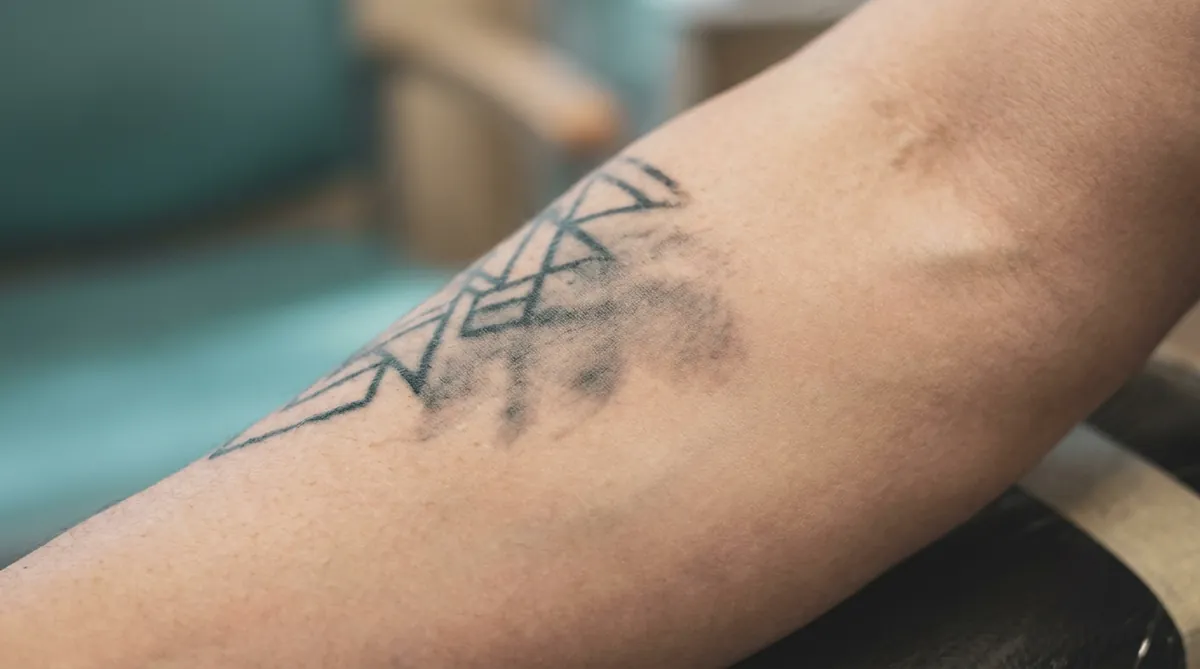
Dry, tight skin over a healing treatment area itches, which invites picking, and picking at a healing blister is the most common route to a scar in this whole procedure. It can also slow surface healing enough that your clinic pushes the next session back.
The fix is unglamorous and it works: a bland, fragrance-free ointment on the site as directed, applied more often than the generic instruction sheet says, and moisturizer on the surrounding skin for the entire six-week gap rather than just the healing week. A bedroom humidifier in winter is not a gimmick here. Our tattoo removal aftercare guide covers the first 72 hours and the blister question in detail; in Denver, the moisturizing part is the section that matters most.
UV is stronger at 5,280 feet
The atmosphere above Denver is thinner than the atmosphere above a coastal city, and thinner atmosphere filters less ultraviolet radiation. At roughly 5,280 feet, about 1,600 meters, you take more UV per hour outdoors than you would at sea level under the same sky. Go up to Evergreen, Boulder's foothills or a trailhead at 9,000 feet and the effect increases again.
This matters because tanned skin has more melanin in the epidermis, melanin absorbs laser energy, and a practitioner facing a tanned treatment area can only lower the fluence or postpone. Lower fluence fractures less pigment per session, which means more sessions. Either way, a summer of sun on an exposed forearm tattoo costs you money.
Winter does not exempt you. Fresh snow reflects a substantial share of incoming UV straight back up, which is why people come off the slopes burned on the underside of the chin. A February ski weekend can tan a wrist or forearm as effectively as a July afternoon in Wash Park.
Timing a course around the Colorado year
A ten-session course at six to eight week intervals runs well over a year, so you cannot avoid every season. You can still schedule intelligently.
- Starting in late fall works well. The first several sessions land in the darkest months, when the tattoo is under sleeves anyway.
- Flag mountain trips in advance. Tell the clinic about a ski week, a 14er or a rafting trip. Booking a session a few days before high-altitude sun is a wasted appointment.
- Cover, do not just screen. Sunscreen on a healing site is second-best; a sleeve or a bandage is better. Once the skin has closed, broad-spectrum SPF 30 or higher every day for the rest of the course.
- Watch the hot tub. Soaking a fresh treatment site in a hot tub or hot spring before it has closed is an infection risk. Most clinics say 48 to 72 hours minimum, longer if you blistered.
Denver is not in the directory yet
Stated plainly: we do not currently list any clinics in Denver or anywhere in Colorado. The directory covers Los Angeles, Las Vegas, Dallas, Houston, Chicago, Atlanta, Boston, Portland, Buffalo and New York. Filling this page with names we have not collected would be worse than admitting the gap.
For now you can browse the covered markets on tattooshops.us. The most useful comparison for a Denver reader is Las Vegas, another arid western market with high UV and a similar price structure, if only to see what a normal rate card looks like.
If you operate a laser removal clinic, med spa or dermatology practice in the Denver metro, adding your listing is free. Denver moves up the queue as clinics come in.
Red flags at a Denver consultation
Consultations are free almost everywhere. Book two or three and pay attention to what goes wrong, not only to what sounds good.
- A guarantee of complete removal on a multi-color tattoo. Nobody can promise that honestly. Black ink on lighter skin often clears completely; green and sky blue sometimes leave a shadow no matter who is holding the laser.
- Vagueness about the machine. You want the platform name and the available wavelengths. A clinic that will not tell you either is hoping you do not know why it matters.
- An exact session count promised on day one. Nobody knows how your skin will respond until it has responded. A range plus a reassessment after two sessions is the honest version.
- No test patch offered, particularly if you have a deeper skin tone, white or cosmetic ink, or a tattoo another clinic has already worked on.
- Sessions offered closer than six weeks apart. Tighter spacing does not speed clearance; it raises the risk of scarring and pigment change, because the fragmented ink has not been carried away yet.
- Silence about sun and dryness. A practitioner working in Denver who never mentions altitude, UV or moisturizing is not thinking about the environment their patients heal in.
- Pressure to prepay today. A discount that expires when you leave the room is a sales technique, not a price.
How many sessions, and what moves the number
Most professional tattoos take 6 to 12 sessions. Amateur and stick-and-poke work often clears in 4 to 6 because the ink sits shallower. Heavy blackwork, layered cover-ups and dense multi-color pieces run to 12 to 15.
Beyond ink density and color, three things shift the count. Placement: circulation drives clearance, so chest and back tattoos fade faster than hands, feet and ankles. Skin tone: Fitzpatrick IV to VI skin needs 1064 nm at lower fluence with 8 to 12 week gaps instead of 6 to 8, which means more visits over a longer period; our guide to removal on dark skin explains what a safe plan looks like. Laser type: picosecond systems fracture pigment into finer fragments and often finish in fewer visits at a higher per-session price, so the total course frequently lands close to a Q-switched course.
If the goal is a new tattoo over the old one rather than clean skin, say so at the consultation. Fading for a cover-up takes 2 to 4 sessions and typically $300 to $900. Our page on fading for cover-ups covers how far to take it and why to bring your artist's design along.
Frequently asked questions
Does Denver's altitude make tattoo removal less effective?
The laser works the same at any elevation. What changes is the healing environment between sessions: drier air stresses the skin barrier and stronger UV tans exposed skin faster, and both can push a clinic toward lower energy or longer gaps. Moisturize consistently and keep the area covered and the difference largely disappears.
Should I moisturize the treated area itself?
Follow your clinic's instructions for the open or blistered site, which usually means a bland ointment and a dressing rather than a general moisturizer. The surrounding skin is a different matter, and in Denver it is worth keeping well moisturized throughout the whole course to reduce itching and picking.
Can I ski between sessions?
Yes, once the skin has closed, but cover the area properly. Snow reflects UV upward and the sun at altitude is stronger than most people account for, so a treated forearm or neck tattoo can tan on the chairlift.
Why does the directory have no Denver clinics?
Coverage is built market by market and Colorado has not been indexed yet. We would rather leave the section empty and say so than invent listings. Local clinics can add themselves free, which is how every city on the site started.
Next steps
Book two or three free consultations, take the red flag list with you, and be realistic about how much high-altitude sun the tattoo is going to see over the next year. Until Denver is covered, you can compare rates, formats and clinic types across the markets already listed on tattooshops.us.
Comments(0)