Laser Tattoo Removal in Boston: Prices, Clinics and Safety
Boston sits at the expensive end of the national range, and there is a reason for it: much of the removal here happens inside dermatology practices attached to teaching hospitals rather than in standalone studios.
silvano para
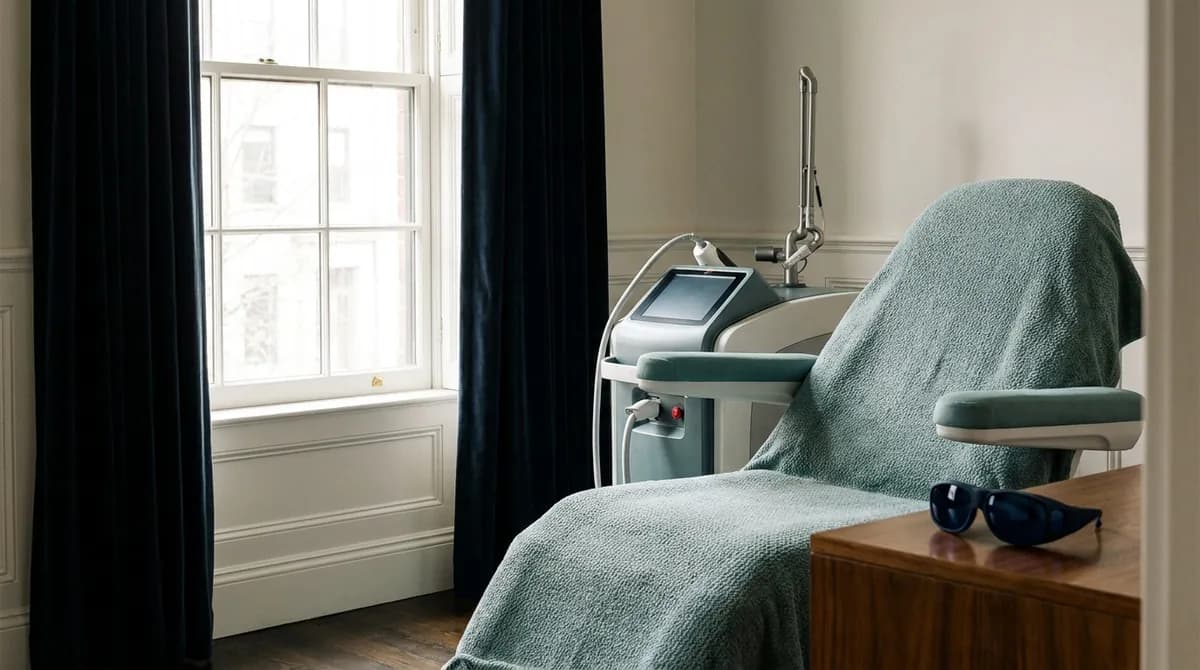
Laser tattoo removal in Boston runs roughly $175 to $450 per session, which puts the city near the top of the national range. What that premium buys is a market unusually thick with hospital dermatology departments, physician owned practices and teaching affiliated clinics. If your tattoo is small, black and sitting on untouched skin, you are paying extra for something you may not need; if it has already been burned, scarred or half treated somewhere else, that same density is the reason people drive in from three states away.
What a session costs in Boston
Boston prices are driven by rent, by physician supervision and by the fact that a lot of the clinics here are attached to a larger medical practice rather than a storefront. Expect a consultation fee at some offices, usually credited toward the first treatment. Quotes are almost always per session rather than per course, and the total depends far more on ink density and color than on how impressive the device sounds.
| Tattoo size | Typical Boston price per session | Sessions usually quoted |
|---|---|---|
| Very small (initials, a symbol, under 2 sq in) | $175 to $250 | 5 to 8 |
| Small (wrist, ankle, 2 to 6 sq in) | $200 to $300 | 6 to 10 |
| Medium (forearm band, shoulder piece) | $275 to $375 | 7 to 11 |
| Large (half sleeve panel, upper back) | $350 to $450 | 8 to 12 |
| Full sleeve or back piece | $450 and up, often billed in sections | 10 to 15 |
| Fading for a cover-up | $150 to $300 per session | 2 to 4 |
A realistic Boston course lands between $1,500 and $4,500 for a medium piece, and above that for anything sleeve sized or heavily colored. Before you book a consult, run your own numbers through the tattoo removal cost calculator so you walk in with a range in your head. If the quote you get is far below the table above, ask what device is being used and how many passes are included, because some low quotes cover a single pass on a fraction of the area.
Boston clinics by neighborhood
The directory listings cluster where the medical buildings are: Back Bay and the South End inside the city, Cambridge and Somerville across the river, and a ring of practices in Brookline, Newton and the towns beyond Route 128. Addresses change, so confirm the current location on each listing page before you drive anywhere.
Back Bay, the South End and downtown
This is the densest cluster and the most expensive. Skin Spa New York - Back Bay and Skin Laundry - Newbury Street sit in the Newbury Street retail corridor and handle removal alongside a broader aesthetics menu. Medical Aesthetics on Tremont works out of the Tremont Street spine that runs through the South End, and Mille Aesthetics and Alexandra Laser Skincare round out the in-city options. Parking is the real cost here; several of these are a short walk from Back Bay or Copley on the Orange and Green lines.
Cambridge and Somerville
Across the Charles, Cambridge Laser Lab serves the Cambridge, Somerville and Allston side of the river, which is convenient if you are a student or work in Kendall Square. Demand here skews younger and toward smaller, single color pieces, so ask whether the clinic prices very small tattoos at a floor rate rather than by the square inch.
Hospital and academic dermatology
The Mass General Department of Dermatology is the clearest example of what makes this market different. Hospital dermatology is slower to book and more expensive per visit, but it is where scarring, keloid history, prior burns and pigment disorders get evaluated by a physician who treats those conditions all week rather than occasionally.
Brookline, Newton and beyond 128
Cosmetic Laser Solutions Medical Spa covers the suburban ring where parking is free and appointment slots open faster. Further out, SkinMD Peabody serves the North Shore and Self Aesthetics Med Spa in Franklin covers the southwest corridor toward Providence. For a course of eight to twelve visits spread over a year, a suburban clinic twenty minutes from home usually beats a downtown clinic you dread parking at.
Why complicated cases end up in Boston
Most tattoo removal is not complicated. A black amateur tattoo on Fitzpatrick II skin clears predictably with 1064 nm and patience. The Boston market matters for the cases that are not that:
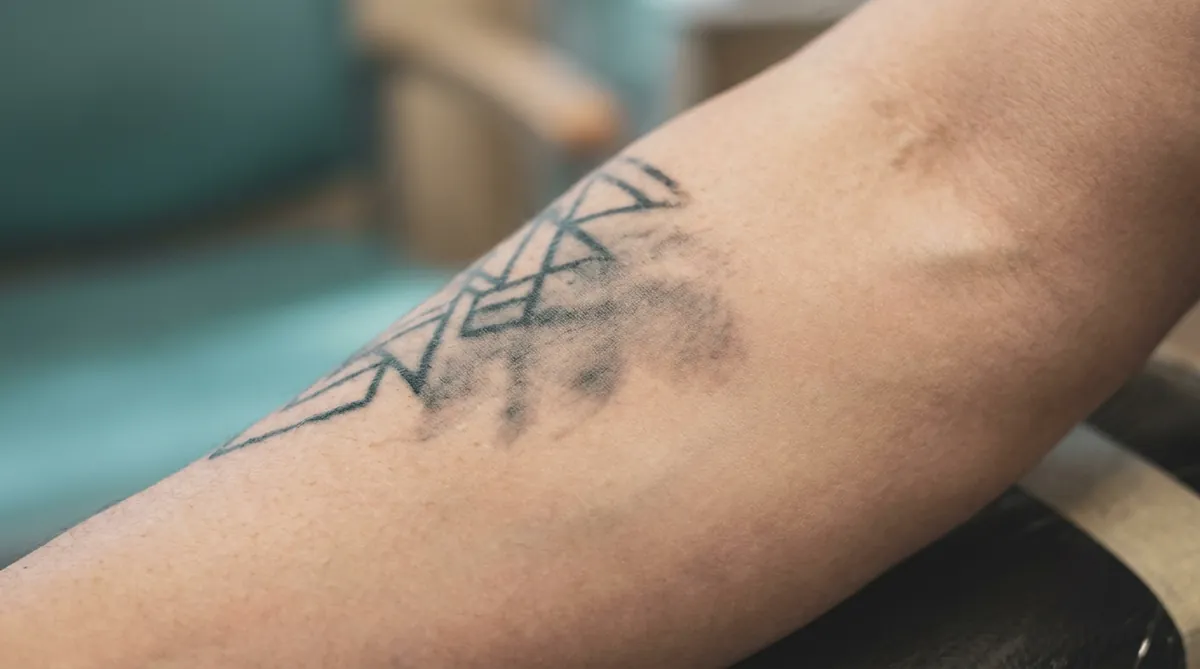
- Skin that was already treated badly. Hypopigmentation, a ring of paradoxical darkening or a raised scar from over-aggressive fluence somewhere else. These need a physician to decide whether more laser is safe at all.
- Keloid or hypertrophic scar history. If you scar thickly from minor wounds, the treatment plan changes before the first pass, not after.
- Fitzpatrick IV to VI skin treated on the wrong wavelength. Epidermal melanin absorbs 532 nm and 755 nm strongly. Damage from that mistake is a pigment problem, not an ink problem, and the fix is slow and conservative. Our guide to tattoo removal on dark skin covers what a safe protocol looks like.
- Cosmetic and permanent makeup pigment. Covered below, and the single most common reason to insist on a physician.
Permanent makeup and cosmetic pigment
Microbladed brows, lip blush and permanent eyeliner are the cases where a cheap session can cost you a year. Cosmetic pigments frequently contain titanium dioxide or iron oxide, and both can undergo a chemical change under laser light: a beige or pink brow can turn slate gray or near black on the first pass. That reaction is well known, which is why careful clinics test a small area and wait, and why treating pigment sitting millimeters from the eye is not a job for an unsupervised operator.
If you are considering brow or lip work removal, ask three questions: has this clinic treated cosmetic pigment before, will they test patch and wait at least four weeks, and do they have corneal eye shields rather than external goggles for anything near the lash line. A clinic that shrugs at any of the three is telling you something useful.
Sessions, spacing and a realistic timeline
Plan on 6 to 12 sessions for full clearance and 2 to 4 if you only need enough fading to let an artist work over the top. Sessions sit 6 to 8 weeks apart on lighter skin and 8 to 12 weeks apart on Fitzpatrick IV to VI, because the interval is not about the laser recovering, it is about your immune system carrying off fragmented pigment. Rushing the interval buys inflammation, not speed.
That arithmetic means a full course in Boston is a 12 to 24 month project. Many patients here schedule the aggressive stretch from October through April and pause over the summer, because a healing treatment site on Cape Cod in July is a pigment problem waiting to happen. If your goal is a cover-up rather than a clean slate, the shorter path costs roughly $300 to $900 in total and ends as soon as your artist says the ghost is light enough to work over.
Paying for it in an expensive city
US health insurance treats tattoo removal as cosmetic and does not cover it, including at a teaching hospital. That is true even when the tattoo causes you professional or psychological harm, so do not build a plan around an appeal. What does exist in Boston is package pricing (most clinics discount a prepaid block of five or six sessions by 10 to 20 percent), medical financing at the larger practices, and occasional community programs aimed at gang related or trafficking related tattoos. Those programs are narrow, waitlisted and usually restricted to visible hand, neck and face work, so treat them as a long shot rather than a plan.
One warning specific to prepaid packages: buy them only after you have seen how your ink responds to the first one or two sessions. Response varies enormously between people with visually identical tattoos, and a package is only a bargain if you actually need every session in it.
Frequently asked questions
Why is Boston more expensive than most US cities?
Commercial rent, the concentration of physician staffed practices and higher labor costs. The national range is $75 to $500 per session; Boston sits in the upper half of that band almost everywhere, and the cheapest quotes in the metro tend to come from suburban clinics rather than anything inside Route 128.
Do I need a dermatologist, or is a med spa fine?
For a black or dark blue tattoo on untreated light to medium skin, a well run med spa with an experienced operator is a reasonable choice. For prior scarring, keloid history, Fitzpatrick IV to VI skin, cosmetic pigment or a tattoo near the eye, start with a dermatology practice. The directory does not verify licenses or credentials, so ask directly who operates the device and who supervises them.
How many sessions will my tattoo actually take?
Amateur or stick and poke work often clears in 4 to 6. Modern professional work with dense black packing usually needs 8 to 12. Greens, sky blues and purples take the longest because they need 694 nm or 755 nm rather than 1064 nm, and not every clinic in the metro carries those wavelengths. Ask before you commit.
What does the healing look like between visits?
Immediate frosting that fades within an hour, then swelling and tenderness for a couple of days, sometimes blistering in the first week. Keep the area clean, covered and out of the sun until it has fully closed. The full routine is on our tattoo removal aftercare page, and following it is the single biggest thing you control in the outcome.
Is there a non-laser option worth considering?
Saline lightening exists and is sometimes offered for small cosmetic pigment work, but it is a wounding technique with a real scarring risk and it is not a general substitute for laser on body art. On a dense professional tattoo it is the wrong tool, and in a city with this much dermatology available there is little reason to reach for it first.
Can I start in the summer?
You can, but you have to be disciplined about covering the area completely for the whole course, not just the week after each visit. Tanned skin raises the risk of pigment change, and most Boston clinics will lower the energy or reschedule if you show up with sun on the treatment site.
Ready to compare consultations? Browse every verified listing, address and phone number in our Boston tattoo removal directory, book two or three consults, and take the quotes home before you decide.
Comments(0)